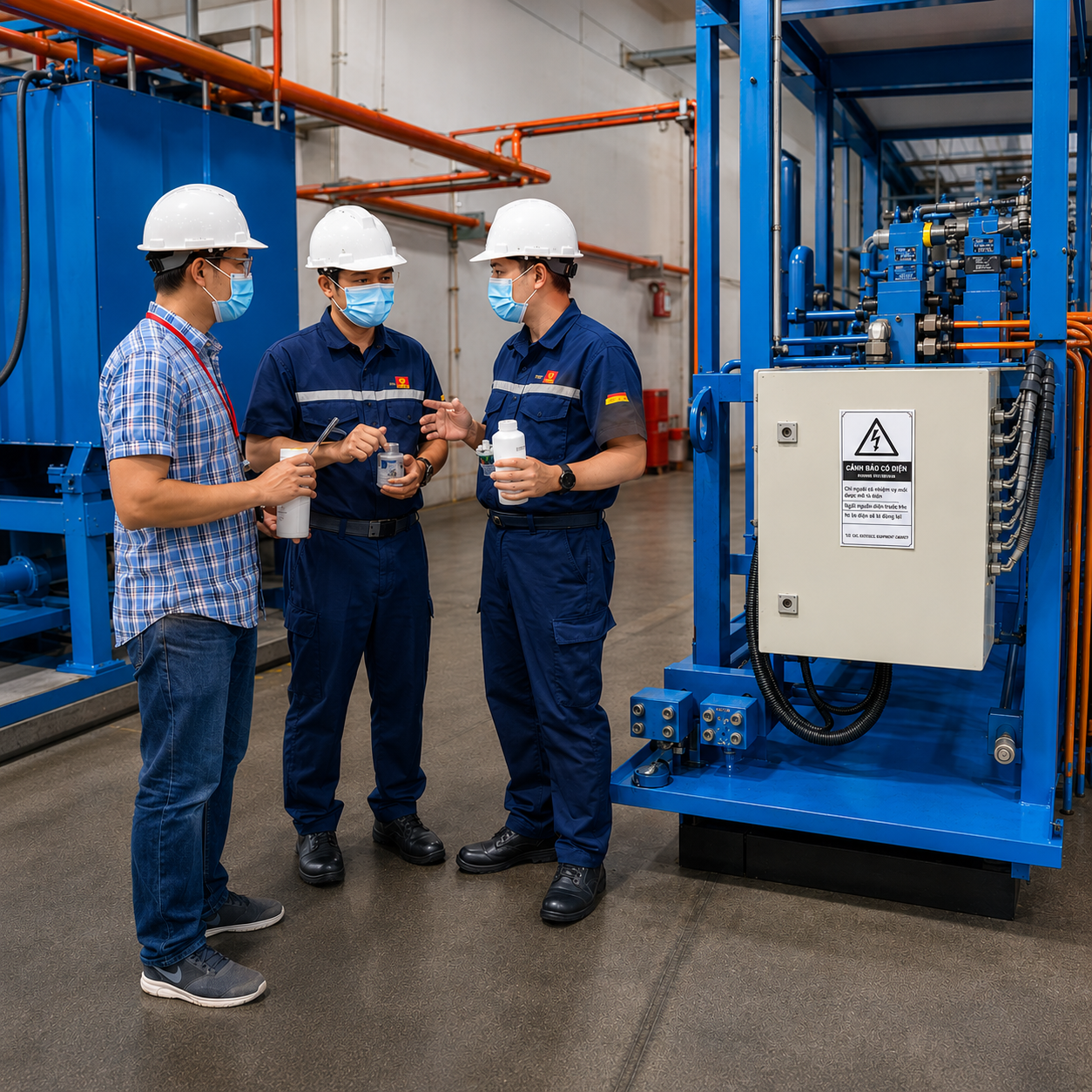
INDUSTRIAL OIL ANALYSIS SERVICE – EQUIPMENT MONITORING & MAINTENANCE COST REDUCTION SOLUTION

In industrial manufacturing environments, lubricating oil does more than reduce friction — it also reflects the operating condition of equipment. Regular oil testing and analysis help businesses detect potential failures early, optimize maintenance strategies, and extend machinery lifespan. T&T Vietnam’s Industrial Oil Analysis Service supports businesses in evaluating lubricant condition, contamination levels, equipment wear, and recommending suitable corrective actions to minimize unexpected downtime risks.

1. What Is an Oil Analysis Service?

Oil Analysis Service is the process of collecting oil samples from operating systems to examine important technical indicators such as:

  • Oil viscosity
  • Water content in oil
  • Oxidation level
  • Wear metal content
  • Dirt and contamination particles
  • Fuel or chemical contamination
  • Lubricant additive condition

Through this analysis, businesses can accurately determine:

✔ Whether the oil is still suitable for use or needs replacement
✔ Whether equipment shows abnormal wear signs
✔ Whether contamination such as water, dust, or metal particles is present
✔ Whether oil change intervals are optimized
✔ Whether there are risks of failure in bearings, gears, hydraulic pumps, or air compressors

2. Why Should Businesses Perform Regular Oil Analysis?

Many factories replace oil based only on fixed schedules, which may result in:

  • Replacing oil too early → increased operating costs
  • Replacing oil too late → equipment wear and major failure risks
  • Failure to detect issues early → unexpected downtime and production disruption

By using industrial lubricant oil analysis services, businesses can achieve:

2.1 Early Detection of Equipment Failures

Oil carries “evidence” of machine operating conditions. Abnormal indicators may include:

  • High iron content → gear wear
  • High copper content → bearing or bushing wear
  • High water contamination → increased oxidation and corrosion risk

This allows businesses to address issues before major failures occur.

2.2 Maintenance Cost Optimization

Oil analysis enables businesses to implement a Predictive Maintenance strategy instead of reactive repairs.

Key benefits include:

  • Reduced unnecessary oil replacement costs
  • Lower equipment downtime
  • Extended equipment service life
  • Reduced major component replacement costs

2.3 Lubricant Quality Control

Discolored oil does not always mean damaged oil.

Oil analysis helps determine:

  • Whether oil is still usable
  • Additive degradation level
  • Contamination or mixing issues
  • Whether filtration or replacement is required

3. T&T Vietnam Oil Analysis Service Process

Step 1 – Equipment Assessment

Our technical team evaluates:

  • Equipment type
  • Lubricant type in use
  • Operating cycle
  • Load conditions and environment

Step 2 – Oil Sampling

Oil samples are collected according to proper technical procedures to ensure accurate analysis results.

Step 3 – Inspection & Analysis

The following indicators are analyzed:

  • Viscosity
  • Water contamination
  • Wear metal concentration
  • Oxidation level
  • Oil cleanliness
  • Additive depletion condition

Step 4 – Technical Report & Recommendations

Customers receive:

✔ Oil condition reports
✔ Equipment operating safety assessments
✔ Recommendations for oil replacement or continued use
✔ Early warnings of equipment failure risks
✔ Lubrication optimization recommendations

4. Equipment Suitable for Oil Analysis

This service is suitable for:

  • Industrial hydraulic systems
  • Rotary screw air compressors
  • Industrial gearboxes
  • CNC machines
  • Heavy-duty gear systems
  • Plastic injection and hydraulic molding machines
  • Industrial engines
  • Mining, construction, and mechanical equipment

5. When Should Oil Be Tested?

Businesses are recommended to perform oil analysis when:

  • Equipment operates continuously under heavy load
  • Oil color changes abnormally
  • Water or contamination is suspected
  • Equipment vibrates, overheats, or produces unusual noise
  • Oil change intervals need optimization
  • Predictive maintenance programs are implemented

6. Why Choose T&T Vietnam?

T&T Vietnam is committed to delivering comprehensive industrial lubrication solutions, not only supplying lubricants but also partnering with businesses through:

  • Lubricant consultation tailored to equipment requirements
  • Oil inspection and analysis
  • Lubrication process development
  • Maintenance optimization
  • Total Cost of Ownership (TCO) reduction

We are committed to the philosophy:

RIGHT POINT – RIGHT TIME – BEST SOLUTION

Helping factories maintain stable operations, reduce operational costs, and minimize downtime risks.

7. Frequently Asked Questions (FAQ)

Does oil analysis help reduce costs?

Yes. It helps businesses avoid replacing oil too early and detect equipment failures before serious damage occurs.

How often should oil analysis be performed?

It depends on equipment type and operating conditions. For heavy-duty systems, periodic testing based on operational cycles is recommended.

Does oil discoloration mean the oil is damaged?

Not necessarily. Oil samples should be analyzed to determine the actual condition.

Can oil analysis be applied to hydraulic oil and compressor oil?

Yes. It applies to hydraulic oil, gear oil, air compressor oil, circulating oil, and many other industrial lubrication systems.

8. Industrial Oil Analysis Service Contact

🏢 T&T Vietnam Lubricants Co., Ltd.

📞 HOTLINE: 0938.368.334
📍 ADDRESS: 6/5 Tan Hoa, Hoc Mon Commune, Ho Chi Minh City, Vietnam
📧 EMAIL: sales@tatco.vn
🌐 WEBSITE: tatco.vn