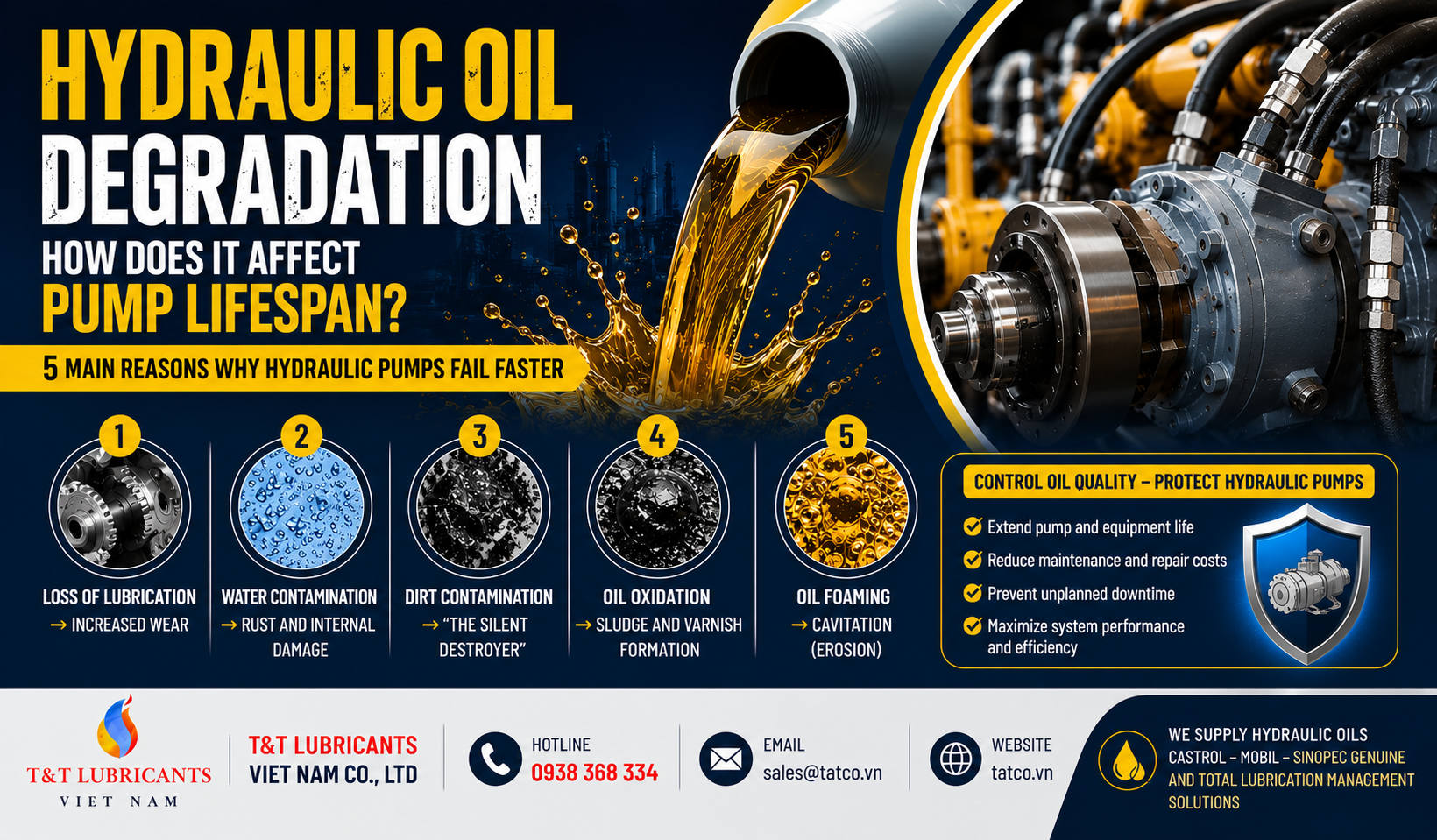
HOW DOES HYDRAULIC OIL DEGRADATION AFFECT PUMP LIFESPAN? 5 REASONS WHY HYDRAULIC PUMPS FAIL FASTER
Hydraulic systems play a critical role in modern manufacturing plants, powering presses, steel rolling mills, CNC machines, die-casting equipment, automated production lines, and many other industrial applications. At the center of these systems is the hydraulic pump, which generates pressure and maintains fluid flow throughout the system.
However, many companies focus on equipment maintenance while overlooking hydraulic oil condition. In reality, more than 70% of hydraulic pump failures are directly or indirectly related to oil quality. Once hydraulic oil degrades, the pump is usually the first component to suffer and often experiences the most severe damage.
Without proper oil condition monitoring, degraded hydraulic oil can reduce system efficiency, increase maintenance costs, and significantly shorten pump life.
1. Loss of Lubrication → Increased Wear
One of the most important functions of hydraulic oil is to provide a protective film between moving metal surfaces. When oil oxidizes or viscosity changes, this protective film becomes weaker.
Consequences include
- Reduced oil film strength.
- Direct metal-to-metal contact.
- Rapid wear and scoring.
- Reduced pump efficiency.
➡️ In severe cases, pump life can be reduced from several years to only a few months.
1.1. Real-World Example from a Steel Plant
At a steel rolling mill, the hydraulic system operated continuously under heavy loads and high temperatures. Maintenance personnel noticed abnormal pump noise, unstable pressure, and elevated oil temperatures.
Initially, the company suspected mechanical damage and planned to replace the pump. However, oil analysis revealed severe oxidation caused by prolonged exposure to high operating temperatures. Viscosity had deteriorated and varnish deposits had formed inside the system.
After changing the hydraulic oil, replacing filters, and cleaning the system, pressure stabilized, oil temperature decreased, and pump noise was significantly reduced.
➡️ This case demonstrates how degraded hydraulic oil can accelerate wear and lead to expensive pump failures if not addressed in time.
2. Water Contamination → Rust and Internal Damage
- Water is one of the most harmful contaminants in hydraulic systems.
Water may enter the system through
- Moisture from the surrounding environment.
- Leaking heat exchangers.
- Improper oil storage.
- Poor sealing of the reservoir.
Consequences include
- Corrosion of metal components.
- Reduced lubricating properties.
- Faster oil oxidation.
- Shortened pump life.
➡️ Even small amounts of water above acceptable limits can significantly reduce hydraulic pump reliability.
3. Dirt Contamination → The Silent Killer
- Many companies underestimate the damage caused by contamination.
Tiny particles entering the system act like sandpaper and can cause:
- Piston wear.
- Scratched valve plates.
- Sticking control valves.
- Reduced pump efficiency.
- Premature component failure.
➡️ Studies show that contamination is one of the leading causes of hydraulic system failures.
3.1. Real-World Example from a Cement Plant
At a cement plant, hydraulic equipment operated in a dusty environment. Due to poor oil handling practices, contaminants entered the system over time.
After several months, the hydraulic pump suffered from reduced flow, sticking valves, and unstable pressure. Oil analysis showed contamination levels far beyond manufacturer recommendations.
Following oil filtration, filter replacement, and improved contamination control procedures, the system returned to stable operation and maintenance costs decreased significantly.
➡️ This example clearly shows how contamination can silently destroy hydraulic pumps and other critical components.
4. Oil Oxidation → Sludge and Varnish Formation
- Hydraulic oil exposed to high temperatures for extended periods will eventually oxidize.
Oxidation produces
- Varnish deposits.
- Sludge.
- Acidic compounds.
These by-products can
- Stick to control valves.
- Cause piston seizure.
- Restrict oil flow.
- Increase operating temperatures.
➡️ Pumps are forced to work harder, resulting in accelerated wear and shorter service life.
5. Oil Foaming → Cavitation Damage
When air becomes trapped inside the oil
- Pump suction becomes unstable.
- Tiny bubbles form.
- Bubbles collapse under pressure.
- Micro-explosions occur inside the pump.
5.1. Warning Signs
- ✔ Abnormal pump noise.
- ✔ Excessive vibration.
- ✔ Foam inside the oil reservoir.
- ✔ Pressure fluctuations.
- ➡️ Prolonged cavitation can pit metal surfaces and eventually destroy the pump.
6. Signs That Hydraulic Oil Is Degrading
Inspect the oil immediately if you observe
- 🔍 Dark or discolored oil.
- 🔍 Burnt odor.
- 🔍 Excessive foam.
- 🔍 High oil temperature.
- 🔍 Reduced machine performance.
- 🔍 Frequent filter plugging.
- 🔍 Sludge inside the reservoir.
- 🔍 Unstable system pressure.
- 🔍 Abnormal pump noise.
7. How Much More Expensive Is Pump Replacement Compared to Oil Changes?
- Routine oil changes represent only a small fraction of operating costs.
In contrast, hydraulic pump failure can result in
- Pump replacement costs.
- Repair labor expenses.
- Production downtime.
- Damage to related equipment.
- Lost production output.
In many cases, the cost of a pump failure is several times higher than the cost of regular oil maintenance and condition monitoring.
8. How to Extend Hydraulic Pump Life
To protect hydraulic pumps and improve system reliability, companies should:
- Use the correct hydraulic oil.
- Monitor oil condition regularly.
- Control contamination and moisture.
- Replace filters on schedule.
- Perform periodic oil analysis.
- Avoid extending oil drain intervals beyond recommended limits.
9. Conclusion
Hydraulic oil is far more than just a power transmission fluid. It directly affects pump life and the reliability of the entire hydraulic system.
Loss of lubrication, water contamination, dirt contamination, oxidation, and foaming can all accelerate wear, reduce efficiency, and lead to costly failures.
Regular oil monitoring, timely oil changes, and contamination control are essential strategies for maximizing pump life and minimizing unplanned downtime.
🏢 T&T Vietnam Lubricants Co., Ltd.
📞 HOTLINE: 0938.368.334
📍 ADDRESS: 6/5 Tan Hoa, Hoc Mon Commune, Ho Chi Minh City, Vietnam
📧 EMAIL: sales@tatco.vn
🌐 WEBSITE: tatco.vn